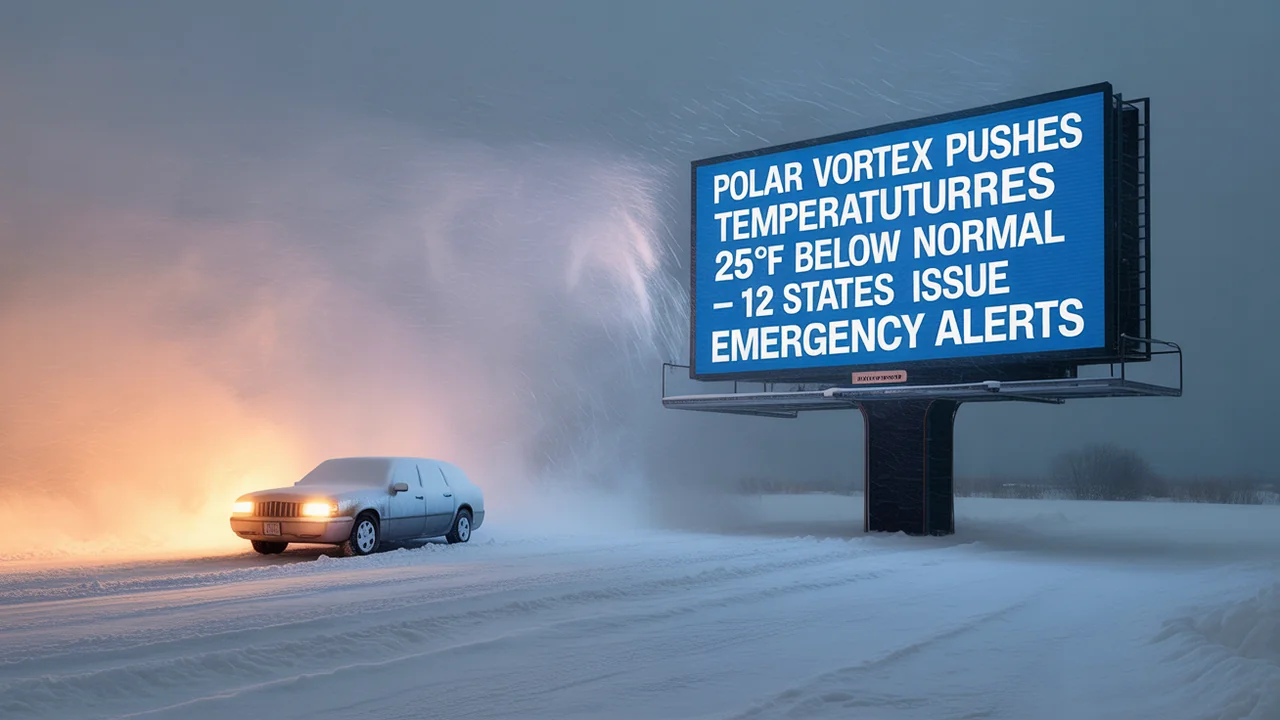
A powerful polar vortex outbreak is gripping large parts of the United States, pushing temperatures as much as 25°F below normal and prompting emergency alerts in at least 12 states. The sudden deep freeze is disrupting daily life, straining power systems, and raising serious safety concerns as dangerously cold air settles across wide regions.
Forecasters warn that this cold snap is not just uncomfortable—it can be life-threatening if precautions are not taken.
What Is Driving This Polar Vortex Event?
The polar vortex is a large area of extremely cold air that usually stays locked over the Arctic. During certain winter patterns, parts of this cold air can break southward into the U.S., bringing intense cold temperatures far below seasonal averages.
In this case, a disruption in upper-level wind patterns has allowed Arctic air to plunge deep into the central and eastern United States. As a result, communities that typically experience winter cold are seeing record-challenging lows, while areas unaccustomed to such extremes are struggling to cope.
How Cold Will It Get?
Many regions are experiencing temperatures 20–25°F below normal, with wind chills making conditions feel even colder.
In several states:
- Overnight lows are dropping well below zero
- Wind chills are reaching dangerously low levels
- Daytime temperatures remain far below freezing
Even areas that normally handle winter weather are facing unusually harsh conditions, increasing risks for frostbite and hypothermia.
States Issuing Emergency Alerts
At least 12 states have issued emergency alerts or cold weather advisories as conditions worsen. These alerts are designed to warn residents about:
- Life-threatening cold exposure
- Risks to power infrastructure
- Travel hazards due to ice and frozen roads
- Increased danger for vulnerable populations
Local governments are urging residents to limit outdoor exposure and check on neighbors, especially the elderly and those without reliable heating.
Power Grids and Infrastructure Under Pressure
The extreme cold is placing heavy stress on power systems as heating demand surges. Utilities in affected regions are closely monitoring energy use to prevent outages.
Frozen pipes are also becoming a major concern. When temperatures stay below freezing for extended periods, water lines can burst, leading to costly damage and service disruptions.
Transportation systems are seeing delays as well. Ice buildup and reduced visibility are affecting road travel, and some areas have reported slower emergency response times due to hazardous conditions.

Health and Safety Risks Rise Sharply
Health officials warn that this type of cold can be dangerous even after short exposure.
Key risks include:
- Frostbite, which can occur within minutes in extreme wind chills
- Hypothermia, especially for those without proper shelter
- Increased risk for people with heart and respiratory conditions
Authorities are emphasizing the importance of wearing layered clothing, covering exposed skin, and avoiding unnecessary outdoor activity.
Impact on Schools, Work, and Daily Life
School districts in several states have delayed openings, moved to remote learning, or canceled classes entirely. Employers are adjusting work schedules where possible to reduce travel during the coldest periods.
For many households, daily routines are being reshaped by the weather—from running faucets to prevent frozen pipes to checking heating systems around the clock.

How Long Will the Cold Last?
Forecasts suggest that the cold snap may linger for several days, with gradual moderation expected later in the week. However, weather experts caution that temperatures could remain below normal even as the most extreme conditions ease.
Residents are advised not to let their guard down too early, as repeated overnight freezes can continue to cause damage and health risks.
What Officials Are Urging People to Do
Emergency agencies across affected states are encouraging residents to:
- Stay indoors as much as possible
- Keep homes properly heated
- Avoid using unsafe heating methods
- Check on elderly neighbors and vulnerable individuals
- Prepare for possible power disruptions
Shelters and warming centers have been opened in some areas to assist those without adequate heating.
The Bigger Picture
While winter cold is not unusual, the intensity of this polar vortex event highlights how quickly conditions can turn dangerous. Scientists note that shifts in atmospheric patterns can lead to sharper temperature swings, making preparedness more important than ever.
For now, the focus remains on safety as millions of Americans endure one of the coldest stretches of the season.
Bottom Line
With temperatures plunging 25°F below normal and emergency alerts active in 12 states, this polar vortex is a serious weather event with real consequences. Staying informed, prepared, and cautious over the next few days could make a critical difference.
FAQs
What is a polar vortex?
A polar vortex is a large mass of cold Arctic air that can move southward, bringing extreme cold to the U.S.
How dangerous is this cold?
Very dangerous. Frostbite and hypothermia can occur quickly, especially with strong winds.
Which areas are most affected?
Parts of the central and eastern U.S. are seeing the most severe temperature drops.
Can power outages happen during extreme cold?
Yes. High energy demand and frozen equipment can increase outage risks.
When will temperatures improve?
Some moderation is expected later in the week, but cold conditions may persist longer in some regions.