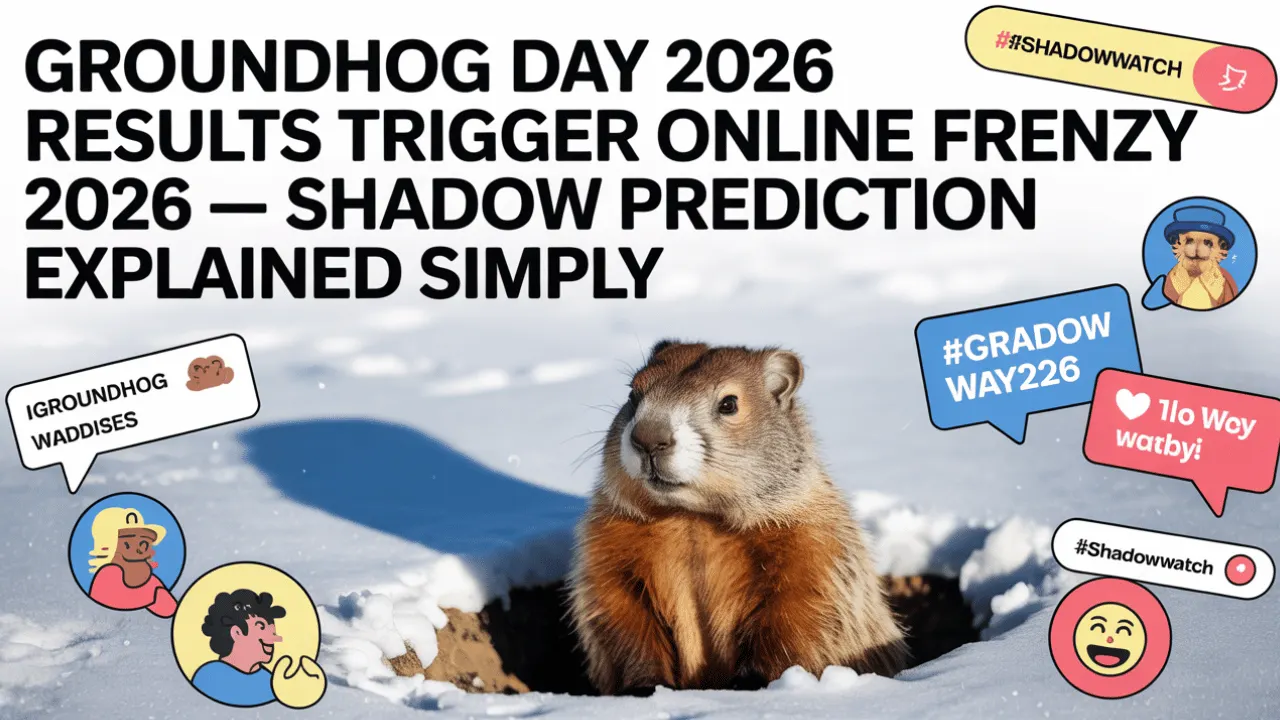
Groundhog Day 2026 Results Trigger Online Frenzy — Shadow Prediction Explained Simply
Groundhog Day 2026 delivered its annual mix of tradition, weather talk, and internet excitement. As soon as the prediction was announced on February 2, social platforms filled with reactions, jokes, memes, and regional debates over what the forecast really means.
The moment tends to move fast: a short ceremony, a clear “shadow” call, and then hours of posts dissecting everything from the groundhog’s behavior to the crowd’s cheers.
What the 2026 Groundhog Day Result Said
Groundhog Day results are typically announced by the event’s handlers immediately after the groundhog is revealed. The key detail is whether the animal is said to have seen its shadow.
In the traditional telling, the outcome is presented in a simple, headline-ready way—followed by local celebrations and a burst of online commentary.
Why the Internet Reacted So Strongly
Groundhog Day has become a reliable social media moment because it’s quick, visual, and easy to debate. People compare it to their local weather, share past predictions, and argue—often humorously—about the groundhog’s “accuracy.”
Clips of the reveal also travel fast, especially when the groundhog squirms, the crowd reacts loudly, or the announcer delivers a dramatic line.
Shadow Prediction, Explained Simply
The shadow rule is straightforward:
If the groundhog “sees” its shadow: tradition says there will be about six more weeks of winter.
If the groundhog does not see its shadow: tradition says an early spring is on the way.
In practice, the call is made by the event organizers as part of a long-running ceremony. The “shadow” idea is tied to bright, sunny conditions that could create a visible shadow—though the tradition is more folklore than forecast.
Where the Tradition Comes From
Groundhog Day traces back to European weather lore that linked animal behavior and seasonal change. Over time, the U.S. version became centered on a groundhog and a set date: February 2.
Communities across the country now host their own events, sometimes with different animals or local twists, but the shadow story remains the main attraction.
What People Often Miss About the Prediction
The Groundhog Day result is best understood as a cultural ritual—part festival, part wintertime entertainment. It’s not a scientific weather report, and it isn’t meant to replace meteorologists or local forecasts.
That gap between tradition and reality is also why it sparks so many jokes: a single “shadow” call becomes a shared national conversation about winter fatigue and spring hopes.

How to Follow Reactions Without Getting Lost
Online discussions tend to split into a few themes: people celebrating the outcome, people disagreeing with it, and people comparing it to the conditions where they live. Many also look up past results, regional groundhogs, and the origin story behind the ritual.
For many viewers, the fun is less about being right and more about taking part in a yearly moment that feels familiar.
FAQs
Did the groundhog really “predict” the weather?
Traditionally, yes—but it’s a folklore-based ceremony rather than a scientific forecast.
What does it mean if the groundhog sees its shadow?
It’s said to signal about six more weeks of winter.
What does it mean if the groundhog doesn’t see its shadow?
It’s said to signal an early spring.
Why does Groundhog Day trend online every year?
The reveal is quick, shareable, and easy to react to, so memes and debates spread fast.