What Did the Groundhog See in 2026?
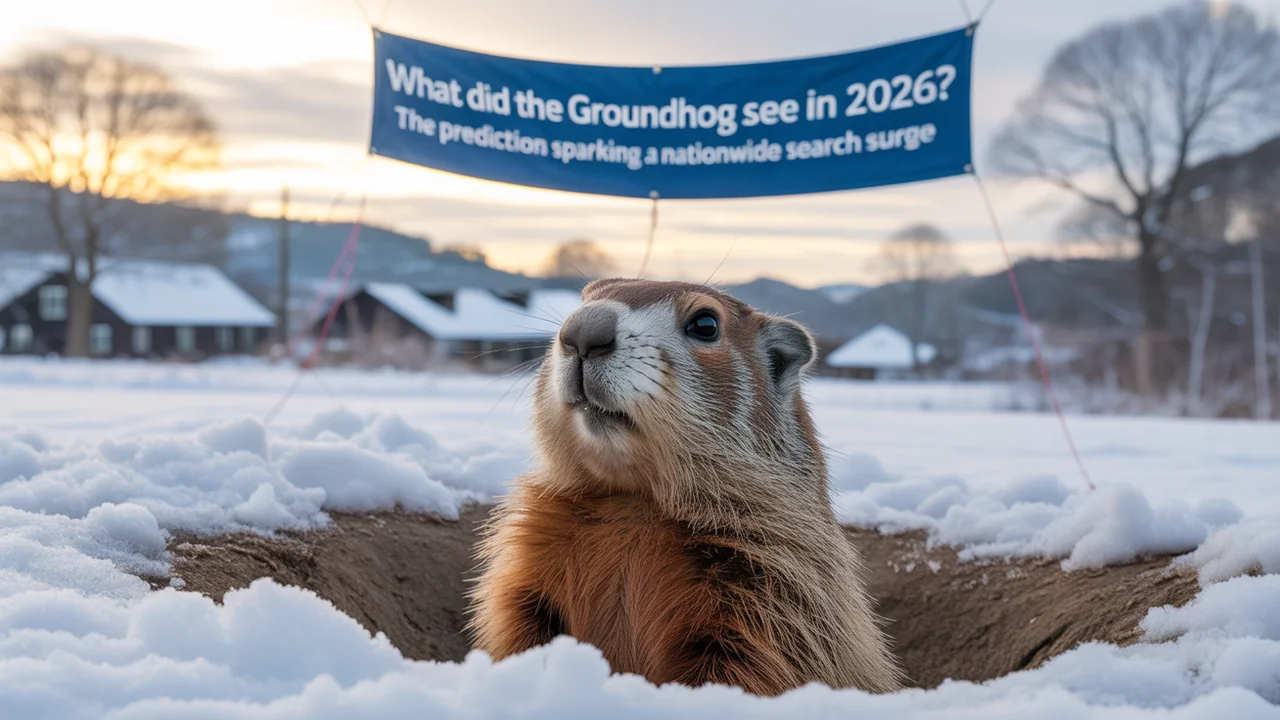
On Groundhog Day 2026, the big question landed early: did the groundhog see its shadow? The tradition, held each year on Feb. 2, once again drew crowds in person and millions more online, as people looked for the simple forecast tied to winter’s staying power—or an early hint of spring.
By mid-morning, search interest spiked nationwide as viewers tried to confirm what was announced, compare reports from different locations, and see the moment for themselves on video.
The 2026 Prediction That Set Off a Search Surge
Online searches jumped within minutes of the day’s main ceremony, with people typing variations like “groundhog 2026 prediction,” “did the groundhog see his shadow,” and “how long is winter if he sees his shadow.”
The surge appeared to be driven by a mix of real-time viewing, quick social clips, and people checking whether local events matched the headline prediction.
Why People Search So Much on Feb. 2
Groundhog Day has a familiar setup, but the outcome still creates a moment of suspense. Many people tune in for the reveal, then immediately look up the result to confirm what they heard or to see a replay.
Another reason: different groundhog events happen across the country, and not all report the same outcome. That can lead to extra searches as people compare the best-known ceremony with regional predictions.
How the Shadow Tradition Works
The folklore is straightforward: if the groundhog “sees its shadow,” it signals a longer winter; if it does not, it signals an early spring. The moment is typically based on conditions at the ceremony, but the broader appeal is the shared ritual rather than meteorological precision.
Because weather and lighting can vary by location and timing, people often look for official statements from event organizers and widely shared footage.

Regional Celebrations and Conflicting Calls
Beyond the most famous celebration, many towns host their own versions with their own groundhogs, mascots, or local traditions. Some events are playful, some are formal, and a few feature long-running “resident” animals cared for by local handlers.
When one location says “shadow” and another says “no shadow,” curiosity tends to rise—especially on social platforms where clips circulate without full context.
What People Looked Up Most After the Announcement
Search trends around Groundhog Day often follow the same pattern: the initial result, then the meaning, then the receipts. In 2026, many users appeared to focus on:
• Confirmation: What was officially announced and by whom
• Video: Clips of the reveal and the crowd reaction
• Timing: When the ceremony happened and where to watch replays
• Local results: Whether nearby celebrations matched the headline call

How the Prediction Fits Into the Bigger Winter Conversation
For many households, Groundhog Day lands at a point when people are ready for any sign of a seasonal shift. The prediction becomes a light, shared talking point—at school, at work, and across group chats—regardless of what the next forecast actually says.
That mix of tradition and timing helps explain why a short, quirky announcement can still move national search traffic in a big way.
FAQs
Did the groundhog see its shadow in 2026?
It depends on which official ceremony or local event you’re referring to, and people searched heavily to confirm the reported outcome.
What does it mean if the groundhog sees its shadow?
By tradition, seeing a shadow signals a longer winter; not seeing it signals an early spring.
Why were searches so high nationwide?
Real-time viewing, short video clips, and conflicting regional calls often drive quick spikes in curiosity.
Do different groundhogs make different predictions?
Yes. Many communities host their own events, and the results don’t always match.